


 Ed Halter
Imperfect yet heartfelt performances highlight the improvised nature of Chris Jolly’s 2000 film project, shot using 1960s technology.
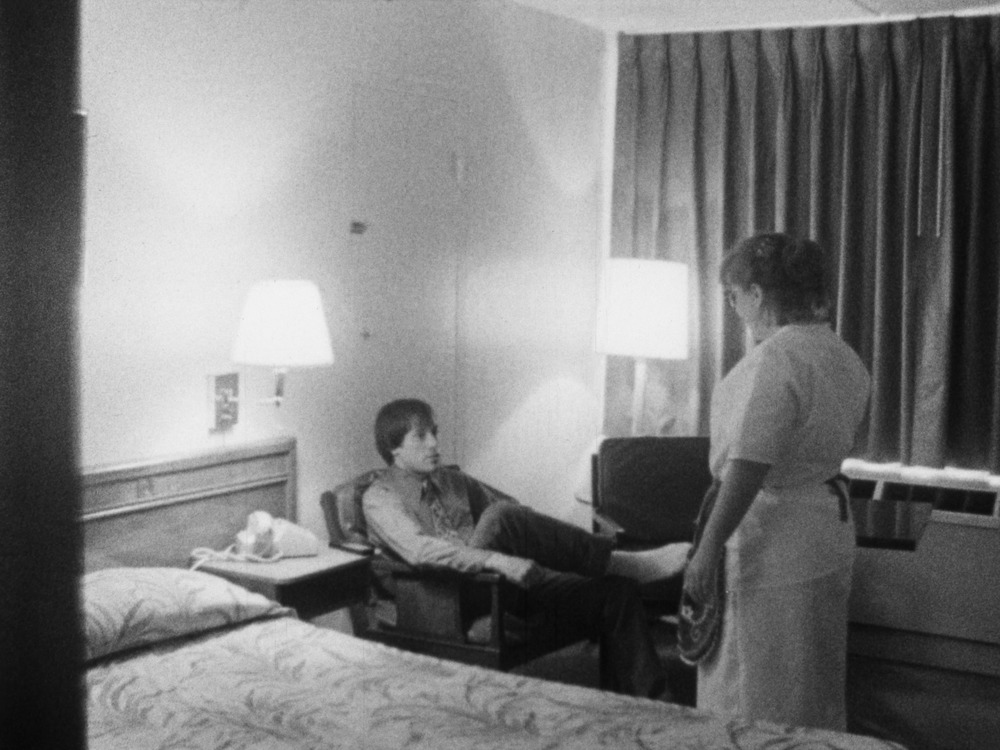
Kevin Barnes as Bernard and Jill Carnes as Helen in Curse of the Seven Jackals. Courtesy Anthology Film Archives. © Chris Jolly.
Curse of the Seven Jackals, written and directed by Chris Jolly, Anthology Film Archives, 32 Second Avenue, New York City, June 19–25, 2026
• • •
Made quickly and cheaply in Athens, Georgia, on black-and-white 16mm during the waning months of the 1990s and never screened more than a handful of times in its own day, Chris Jolly’s sole feature, Curse of the Seven Jackals (2000), contains a scene that has been fixed in my aging memory for over twenty-five years. The film’s premise concerns a young man named Bernard (played with effective understatement by Kevin Barnes, better known as front man of the band Of Montreal), who agrees to serve as a human guinea pig for a medical company’s synthetic-blood trials in order to raise money for a dream trip to Egypt. But neither the company’s facilities nor Egypt are ever visited, nor for that matter is the hex of the film’s title even mentioned; Curse instead aimlessly follows Bernard and his kooky older friend Helen (the elfin-voiced Jill Carnes) as they wander around roadside Athens and kill time kibbitzing about reincarnation and psychic phenomena in the motel room where he is lodging and that she is paid to clean. About a quarter of the way into the picture, the pair decides to attend a bingo game at a VFW post, greeted by a decommissioned fighter jet parked at the entrance as they arrive.
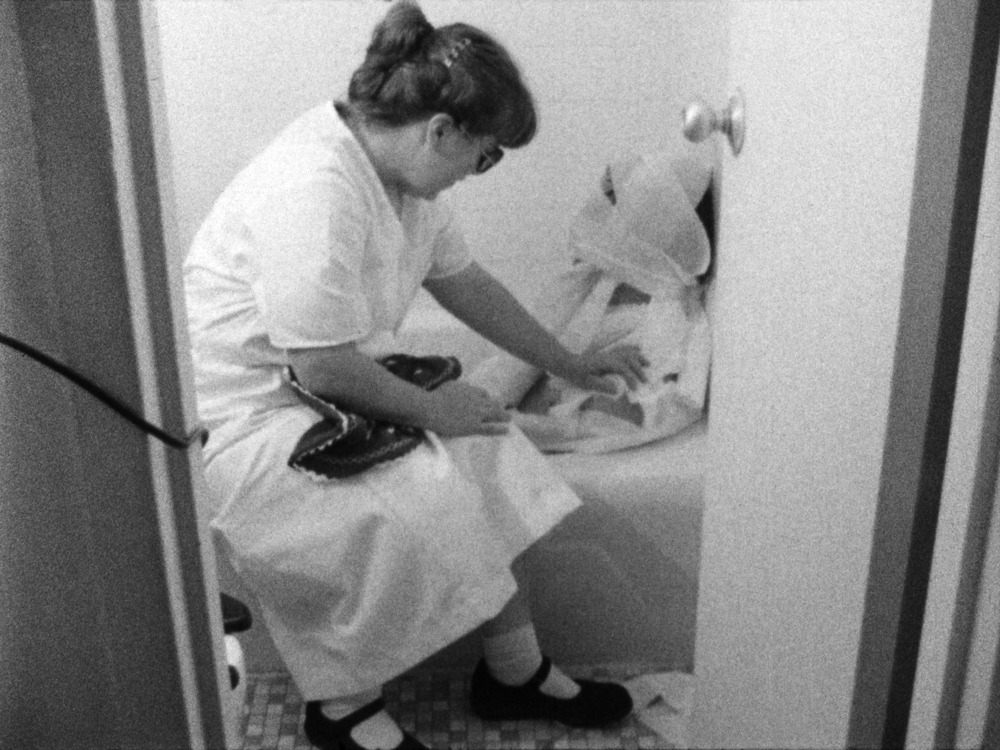
Jill Carnes as Helen and Kevin Barnes as Bernard in Curse of the Seven Jackals. Courtesy Anthology Film Archives. © Chris Jolly.
Their evening at the hall is portrayed in a single, unbroken five-minute shot. The camera begins by facing Bernard and Helen directly as they dab their gridded paper sheets, then slowly pivots left nearly 360 degrees, taking in the cavernous space with its wood paneling, dropped ceiling, fluorescent lights, and sparkling American flag. Its steady progress rhymes with the slow, heat-laden motions of a collection of everyday Southerners playing at tables or milling about; it lingers upon the game’s drawling caller as he patiently reads letters and numbers off an electronic board, and eventually pans right—in just as unhurried a fashion—to return to rest upon the main characters once more. The whole stretch is recorded with synchronized, monophonic sound, giving the event the air of an old cinema-vérité documentary (that is, of a core sample of unblemished reality extracted perfectly from time), the caller’s echoing voice and his bingo machine’s intermittent beeps mixing with the low rhythmic clatter of the camera’s own operations to evoke in this long image a phantom depth of both space and time.
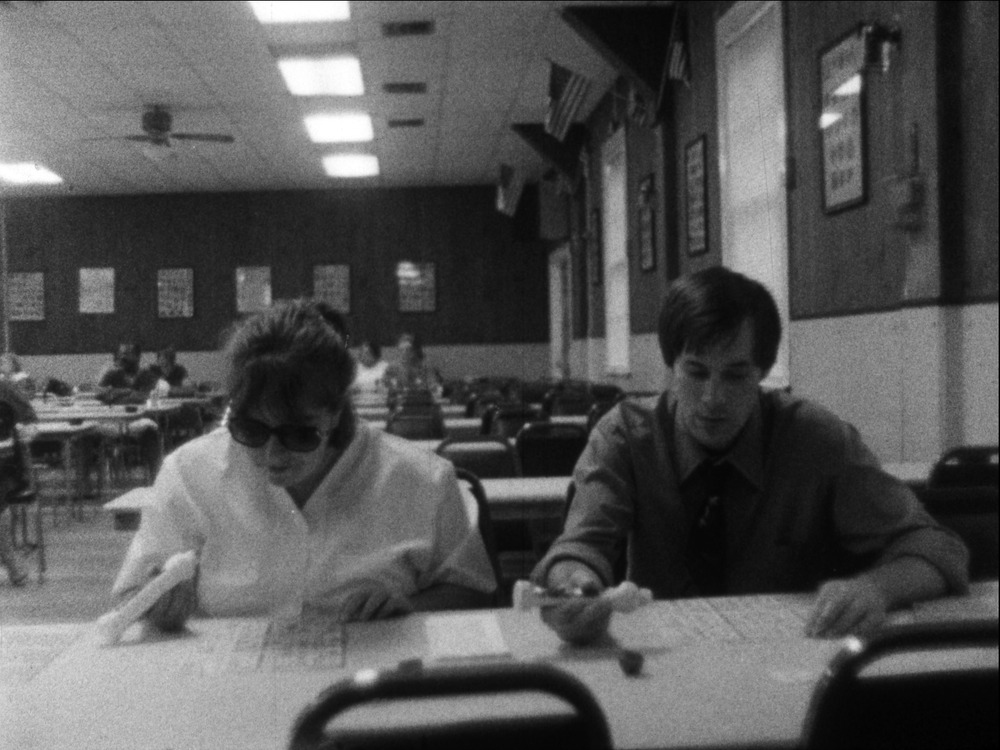
Jill Carnes as Helen and Kevin Barnes as Bernard in Curse of the Seven Jackals. Courtesy Anthology Film Archives. © Chris Jolly.
Curse’s thin veil of fiction dissipates once more in a later scene of Helen and Bernard at a karaoke night. Whereas the VFW hall was all light and space, here the bar is dark and cramped; instead of an unbroken shot, we witness a roster of locals shown in short snippets punctuated by loud bloops generated when Jolly turns his camera off and on between singers: a stiff duo intones “Summer Nights” from Grease, a mousy woman leans into “Unchained Melody,” three frat bros do their best Sir Mix-a-Lot. The celluloid struggles through the camera as Jolly starts and stops, causing the image to jitter erratically. As in the bingo scene, the collision of the nonactors’ chance operations with the real-time limitations of camera mechanics and film chemistry creates a powerfully dreamlike state of down-home wabi-sabi. Some imperfect yet heartfelt performances have been unexpectedly immortalized, highlighting by analogy the improvised nature of the project as a whole, its advanced and committed amateurism. The medium is not so much the message as the mood.
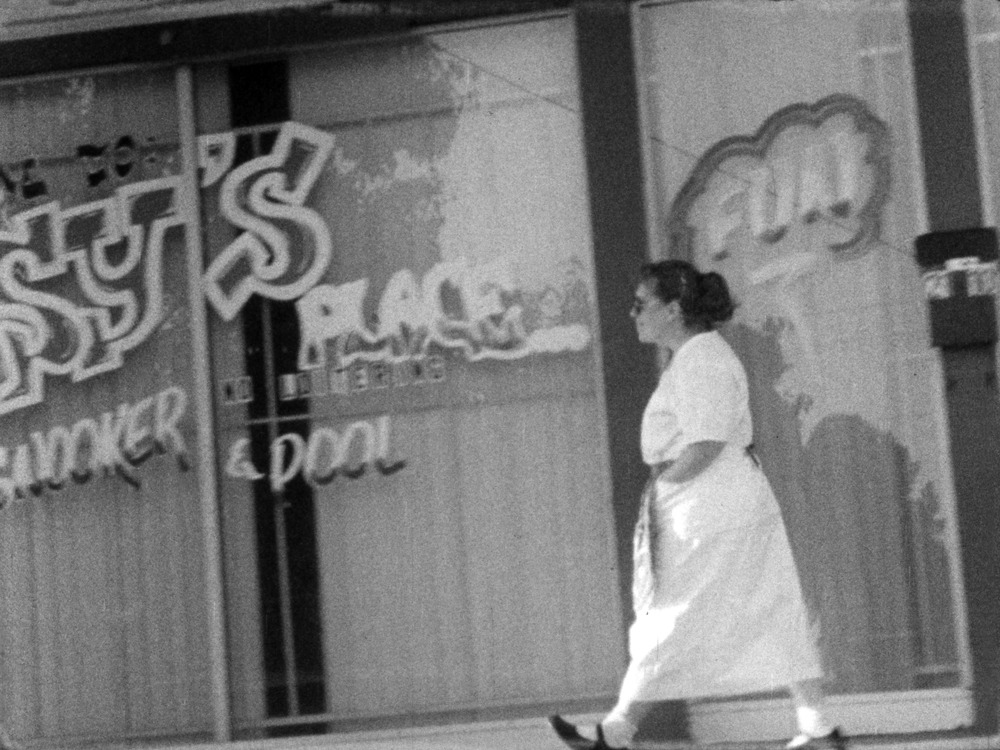
Jill Carnes as Helen in Curse of the Seven Jackals. Courtesy Anthology Film Archives. © Chris Jolly.
In the late 1990s, as digital video became the format of choice for independent cinema and 16mm seemed destined for the trash heap of history, Jolly’s insistence on shooting Curse using 1960s technology must have seemed like youthful insanity. A photography student just out of college, Jolly was then working at the University of Georgia’s media archives, where he encountered an old Auricon 16mm camera that had been junked by the school’s journalism department. Bulky and barely mobile, the Auricon had two special features that were unusual for 16mm: it could take extra-long reels of film, allowing the camera operator to shoot over a half hour of footage without reloading, and it recorded sound synchronously, like videotape.
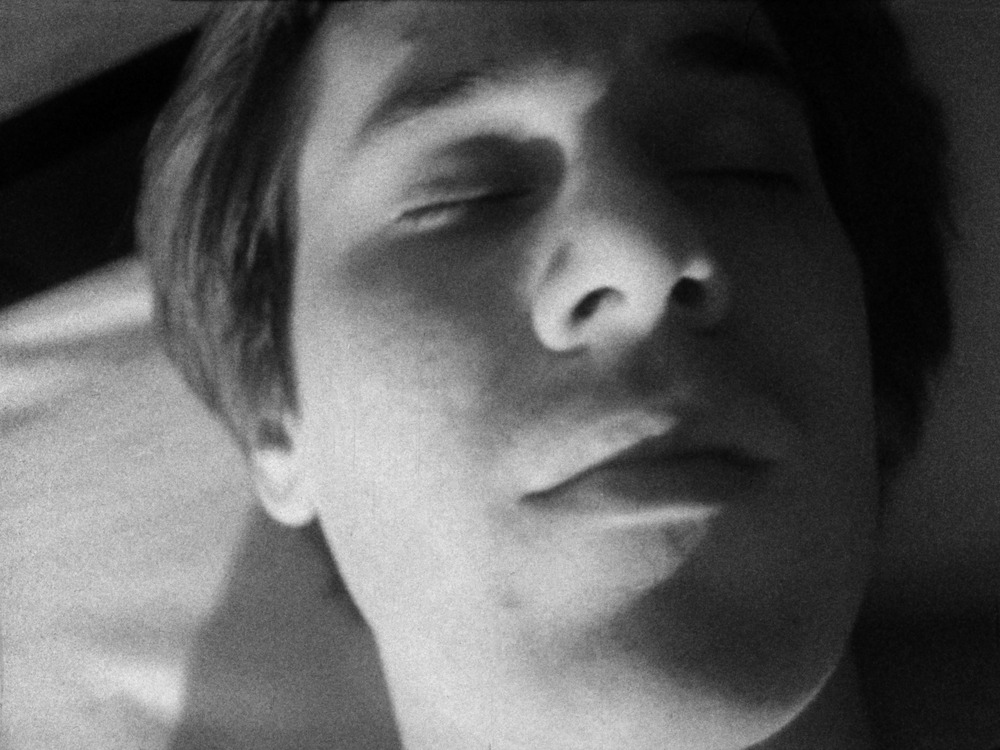
Kevin Barnes as Bernard in Curse of the Seven Jackals. Courtesy Anthology Film Archives. © Chris Jolly.
Avant-garde-film buffs know the Auricon as Andy Warhol’s camera of choice. Jolly knew about Warhol and had made a bunch of short movies on Super 8, which had a similar start-stop mechanism, so he was familiar with the practice of editing sequences (like the karaoke scene) entirely in-camera. Curse’s shambolic storyline serves essentially as an excuse for Jolly’s extended experiments with the medium, which he used in some ways Warhol never did. For the film’s exteriors and a few other sequences, Jolly shot his footage silently on a handheld Bell and Howell, then rewound and ran the undeveloped stock again through the Auricon in order to record sound, unsynced; this allowed him to include a demented, discordant musical score throughout the film, performed by himself and members of the local indie scene.
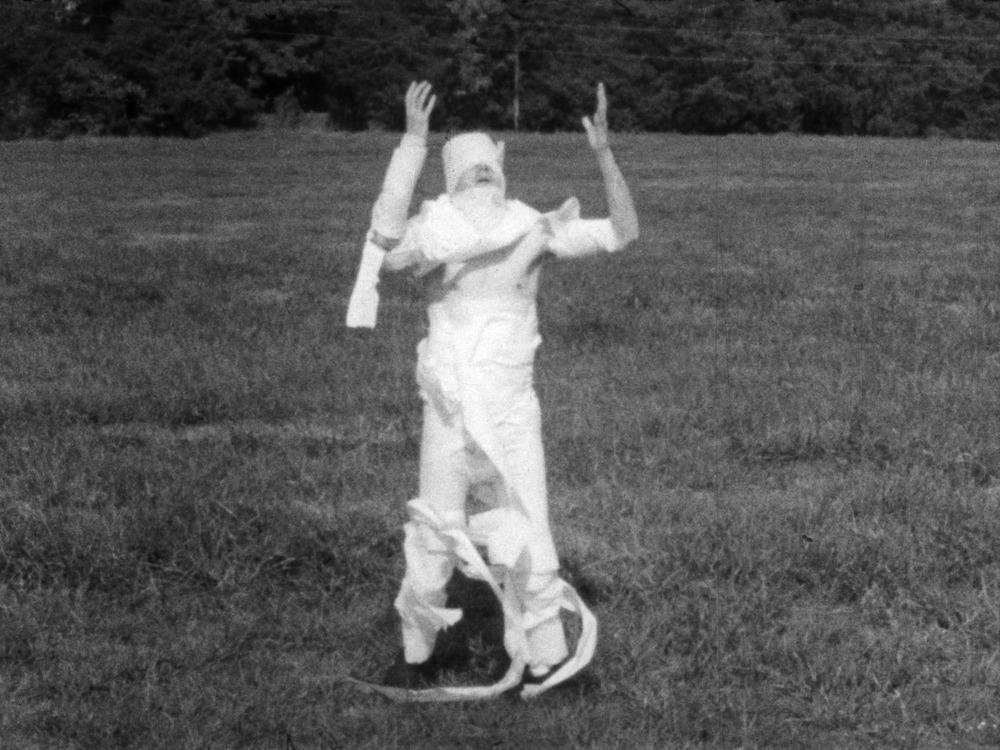
Kevin Barnes as Bernard in Curse of the Seven Jackals. Courtesy Anthology Film Archives. © Chris Jolly.
When it first screened, Curse’s knowing retro-formalism felt like a skillful performance of generational drag, a young Gen-X artist trying on the obsolete technologies of his recent predecessors as if piecing together a thrift-store outfit. And like thrifting, the film evinced a certain wit, a desire to evoke and inhabit a lost past, and a stubborn fascination with materials that still have things to say, even if fashions have moved on. Seen today, Anthology’s new digital restoration of Curse still undoubtedly evokes Warhol’s vibe (or, even more precisely, the wandering-fool style of Ron Rice and early Ken Jacobs), but now its borrowings from silent cinema seem more fundamental, signaled most directly through the many intertitles that serve as the narrative skeleton. These are simple statements like “BERNARD AND HELEN GO TO WATCH KARAOKE” and “BERNARD ROAMS THE EARTH; MAD,” which arrive via multiple generations of media transmigration: printed off a computer, recorded by a video camera to VHS, and then shot with the Auricon on film off a cathode-ray television. Here, then, is the whole history of moving images compressed into thickly layered moments. Here is satori glimpsed in the harmony of freedom and necessity. Here is a great paean to a dead medium’s perpetual youth.
Ed Halter is a founder and director of Light Industry, a venue for cinema in all its forms in Brooklyn, New York, and Critic in Residence at Bard College in Annandale-on-Hudson, New York.