


 David Cote
Crazy, cruel, clueless, all of the above: in his new adaptation of Jean Genet’s play, Kip Williams checks off every box.
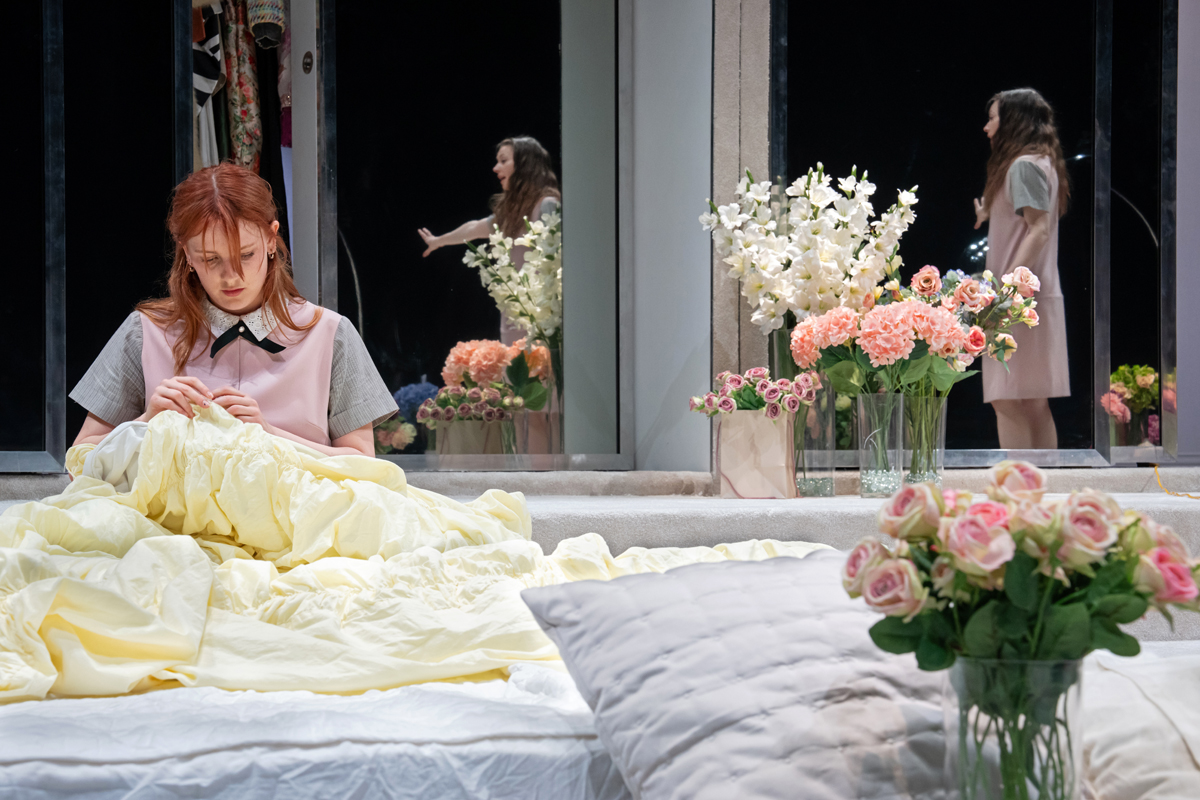
Phia Saban as Solange and Lydia Wilson as Claire in The Maids. Courtesy St. Ann’s Warehouse. Photo: Julieta Cervantes.
The Maids, written by Jean Genet, adapted and directed by Kip Williams, St. Ann’s Warehouse, 45 Water Street, Brooklyn,
through June 14, 2026
• • •
The 1933 double homicide that inspired Jean Genet’s The Maids began with blinding. Before sisters Christine and Léa Papin bludgeoned and butchered their employer, Madame Léonie Lancelin, and her daughter, Genevieve (using household objects such as pewter pitchers and kitchen knives), they first gouged out the victims’ eyeballs, by hand. (“They tore out their eyes as Bacchantes castrate their victims,” Jacques Lacan waxed poetic in an essay at the time.) Fourteen years after the crime, Genet sublimated the gore in lurid speeches and camp posturing. In fact, his fictional servants are quite inept: Madame exits her residence blithely intact. Inflamed, Solange and Claire discuss cutting their mistress into pieces and burying her in the woods, but it’s just talk. More potent than bloody murder, in Genet’s theater, is seeing and being seen: in sumptuous couture, in the vanity mirror, reflected in the sheen on Madame’s black patent-leather pumps one stoops over to spit-polish. To lose sight of one’s face, especially in the hyper-mediated Maids adapted and directed by Kip Williams at St. Ann’s Warehouse, is true annihilation.
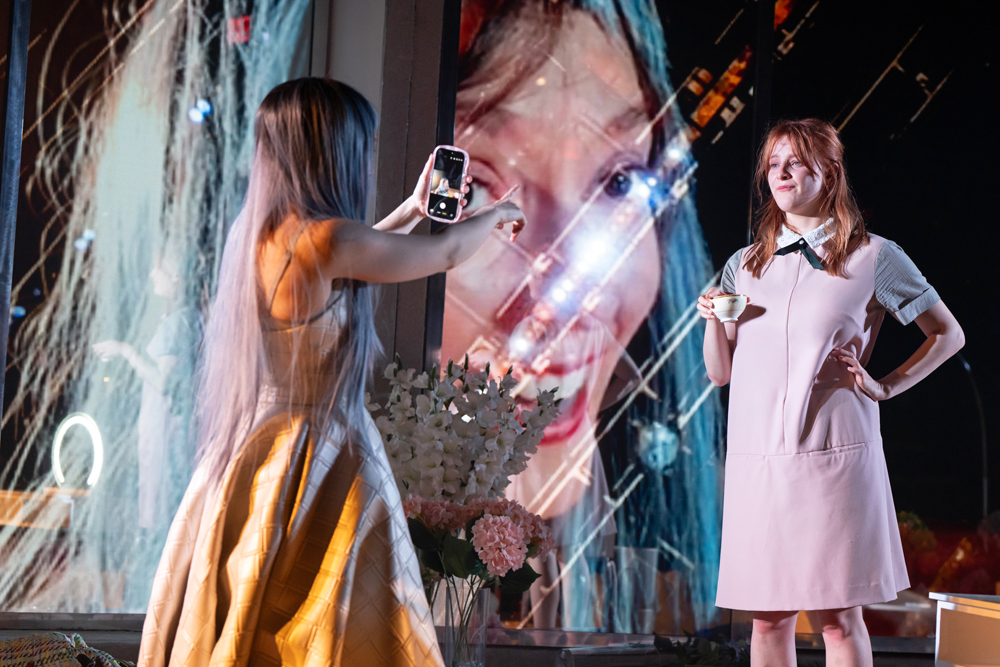
Lydia Wilson as Claire and Phia Saban as Solange in The Maids. Courtesy St. Ann’s Warehouse. Photo: Julieta Cervantes.
Staring for hours at screens is hell on the peepers, too: doomscrolling or endlessly tweaking selfies becomes a sort of willed enucleation. Williams’s aggressively Gen Z update (which debuted last fall at London’s Donmar Warehouse) is set, per Genet, in the chic, flower-filled boudoir (designed by Rosanna Vize) of a wealthy socialite. But the young ladies LARPing about in their mistress’s room pout at smartphones adding painfully au courant beauty filters for perfect, wrinkleless skin and giant doe-eyes, which we see video-projected on the set. Claire (Lydia Wilson) and her younger sister, Solange (Phia Saban), are busy enacting their secret “ceremony,” in which Claire dresses up as Madame and addresses Solange as “Claire,” alternating insults and commands with salacious flirting (the Papin siblings were rumored to be incestuous). “I can see it in your eyes,” Claire-as-Madame seethes. “You hate me!” To which Solange meekly replies, “I love you,” prompting C-as-M to scoff, “Look how old I am! I look like I’m thirty!” The thirty-is-ancient running joke gives one the “ick,” as Madame would say.
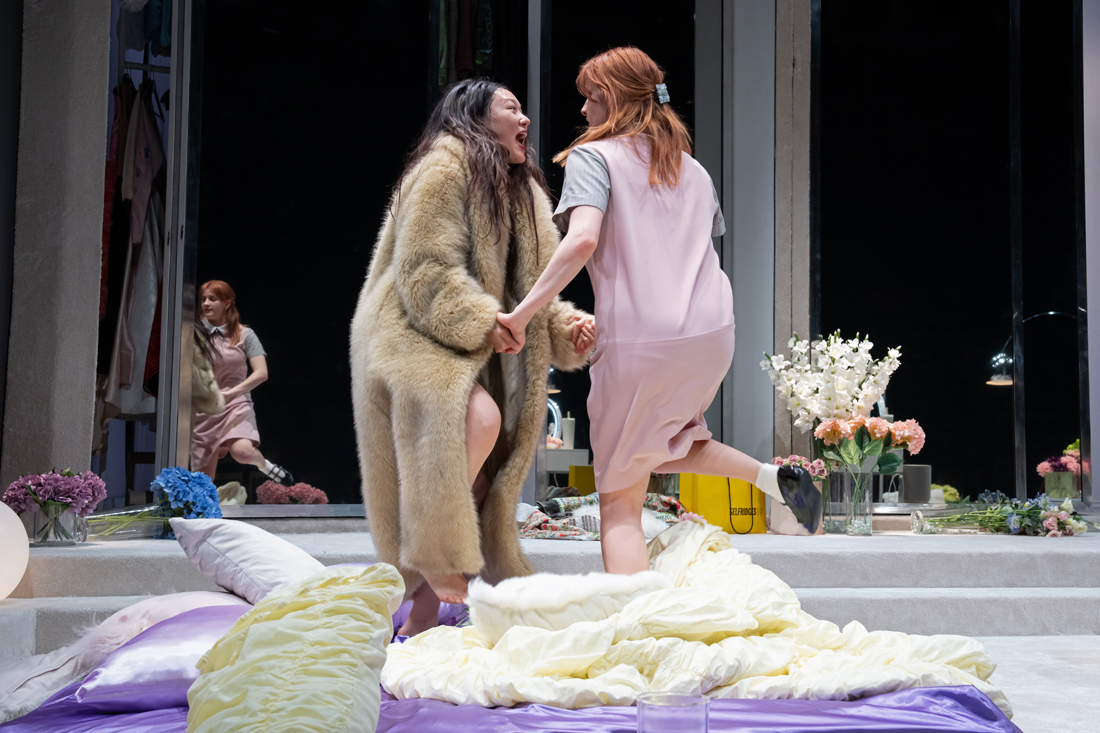
Yerin Ha as Madame and Phia Saban as Solange in The Maids. Courtesy St. Ann’s Warehouse. Photo: Julieta Cervantes.
When boss lady finally appears, strenuously screeched by Bridgerton actor Yerin Ha, she’s a billionaire’s bipolar daughter and influencer with 28 million followers. Her offstage boyfriend has been arrested on charges of embezzling from Madame’s father (the cops were tipped off by Claire, who hacked his laptop). The servants whom Madame manically abuses, then treats as BFFs, are plotting to snuff her out with a barbiturate-laced “herbal infusion.”
Anyone attempting The Maids should first address a few pertinent questions: Is Madame cruel or simply clueless? If she’s not evil, are Claire and Solange? Or are they simply crazy? Or evil and crazy? Williams seems to have circled in thick Sharpie: All of the Above.
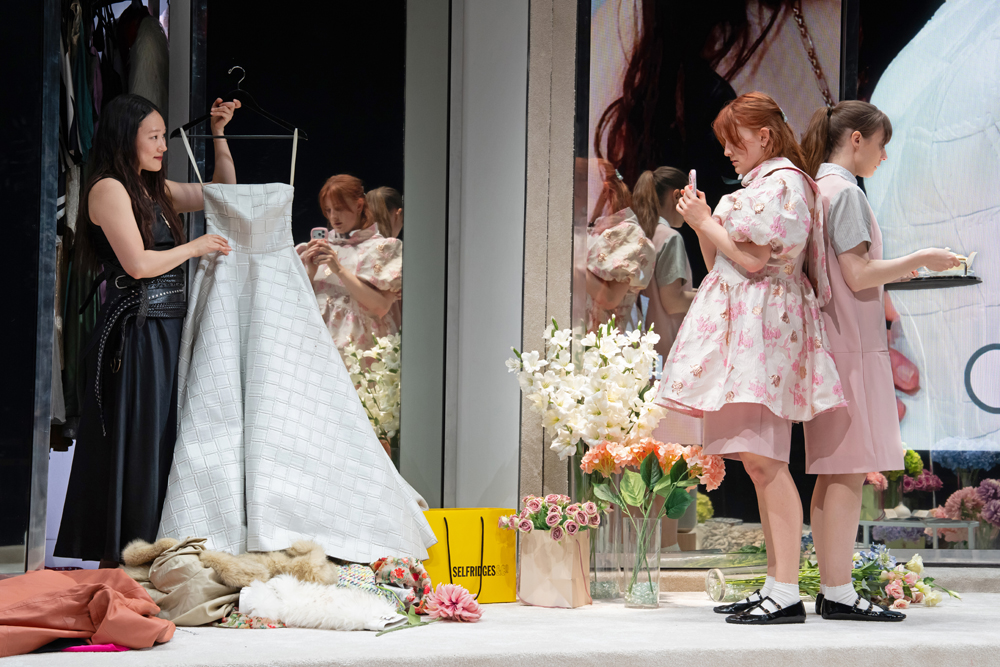
Yerin Ha as Madame, Phia Saban as Solange, and Lydia Wilson as Claire in The Maids. Courtesy St. Ann’s Warehouse. Photo: Julieta Cervantes.
ADHD hysterics and Kardashian filters, frankly, don’t cut it. Despite The Maids’ aura of queer anarchy and pomo preoccupation with simulacra, it is a chamber psychodrama that hews to Aristotelian unities and resists this sort of techno glow-up. The drama drifts between naturalism and feverish performative rhetoric, grounded in a critical, serious relationship to caste and the master-servant dialectic. To justify his Instagrammed concept—video (designed by Zakk Hein) streamed on floor-to-ceiling mirrored doors to enormous closets—Williams thoroughly mutilates the source (the Papin gals would be proud). In most English translations, Genet’s text clocks in at around ninety minutes and 12,000 words. Williams’s rendering is 18,000 words and runs a hundred minutes, engorged with an excess of Gen Z Nadsat. “Fucking suck on it,” Solange says. “Yeah. I mean, she literally might die,” Claire responds. OMG, like, so trag my girlies no cap just kill yourself now. Why would anyone pay $100 a ticket to hear the linguistic equivalent of bubblegum vape mist? Stroll the Meatpacking District any weekend and breathe it for free.
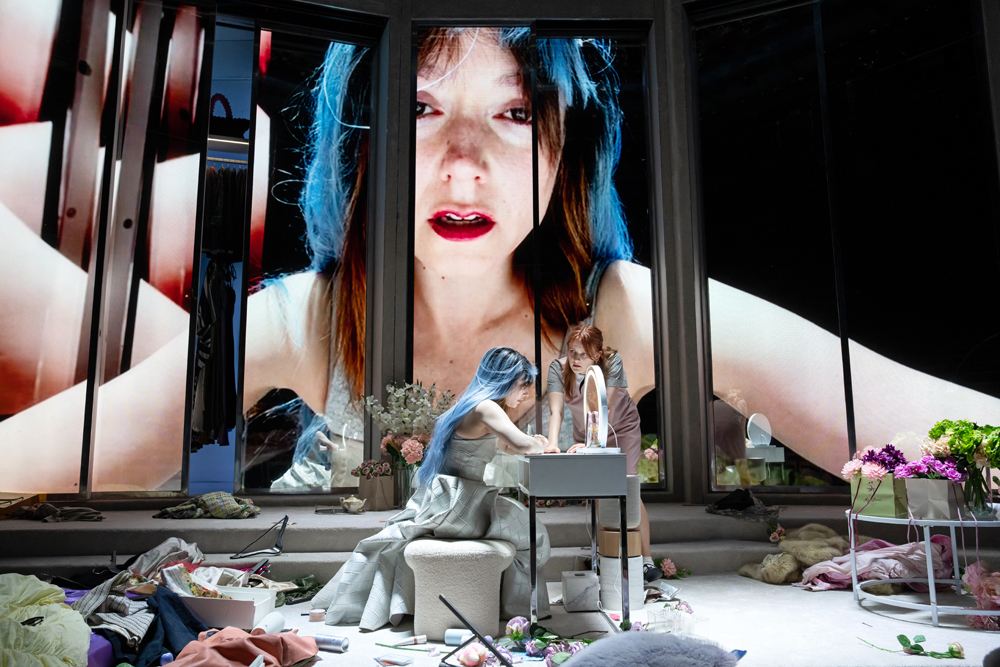
Lydia Wilson as Claire and Phia Saban as Solange in The Maids. Courtesy St. Ann’s Warehouse. Photo: Julieta Cervantes.
So, in case you were wondering: no, Williams is no Jean Genet. He’s not even a distant Bernard Frechtman or Martin Crimp or (god help us) Andrew Upton—each of whom translated The Maids between 1954 and 2013, turning Genet’s lyrical blend of the religiose and the criminal into actable English. Upton, an Australian like Williams, did his cunt-peppered version for his wife, Cate Blanchett, who starred with Isabelle Huppert in a Sydney Theatre Company production that traveled to New York. At the time, director Benedict Andrews also employed live video on mirrored walls, and also failed to elicit menace or rapture, but for different reasons (among them, Huppert’s impenetrable accent). As with the current revival, the Blanchett vehicle lacked erotic heat and any sense of danger.
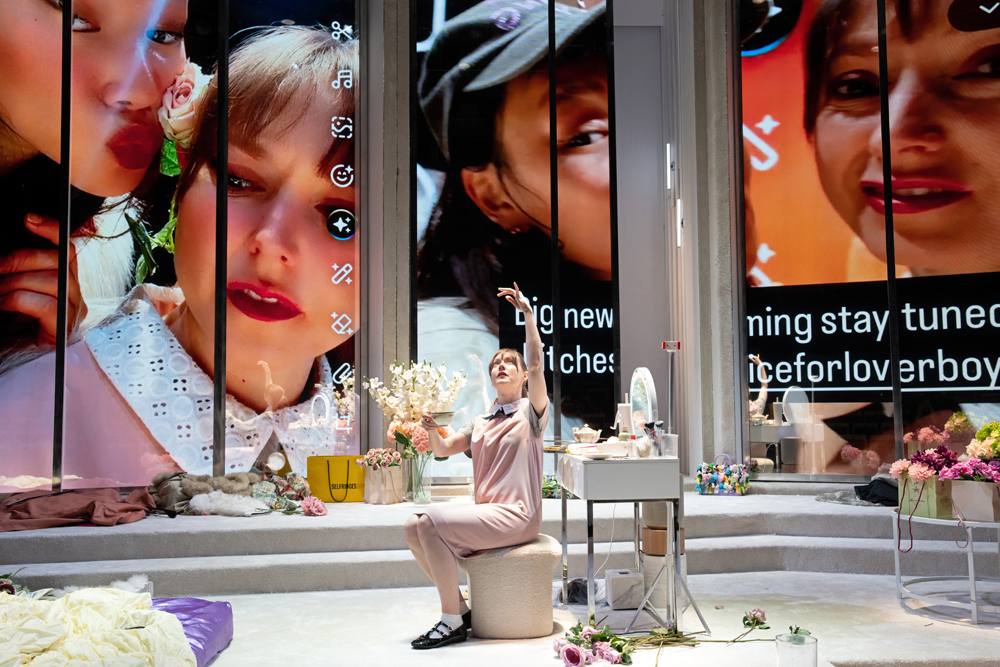
Lydia Wilson as Claire in The Maids. Courtesy St. Ann’s Warehouse. Photo: Julieta Cervantes.
The Maids should have some kink, it should be horny and stabby, a dual spray of spit and perfume. In the 1975 film with Susannah York and Glenda Jackson (free on YouTube), there’s more Sapphic sizzle in the first two minutes than an entire night at St. Ann’s. Unless your fetish is watching people stare into phones and swap out blubber lips for Clavicular cheekbones or puppy snout for bucktoothed, bug-eyed hobos, the vibe is more incel than incest.
Avoiding any relevant social reality (the maids could be immigrants, or trans women, or coded poor) but wallowing in trendy social signifiers—the slang, the endless designer-name-dropping, the hashtags—Williams curtails our sympathies and soon exhausts our patience. This Maids is clearly happening now, looksmaxxed through the latest apps and upgrades, but the deepest observation it can offer is: Superrich influencers: Horrible! Social media: Maddening!
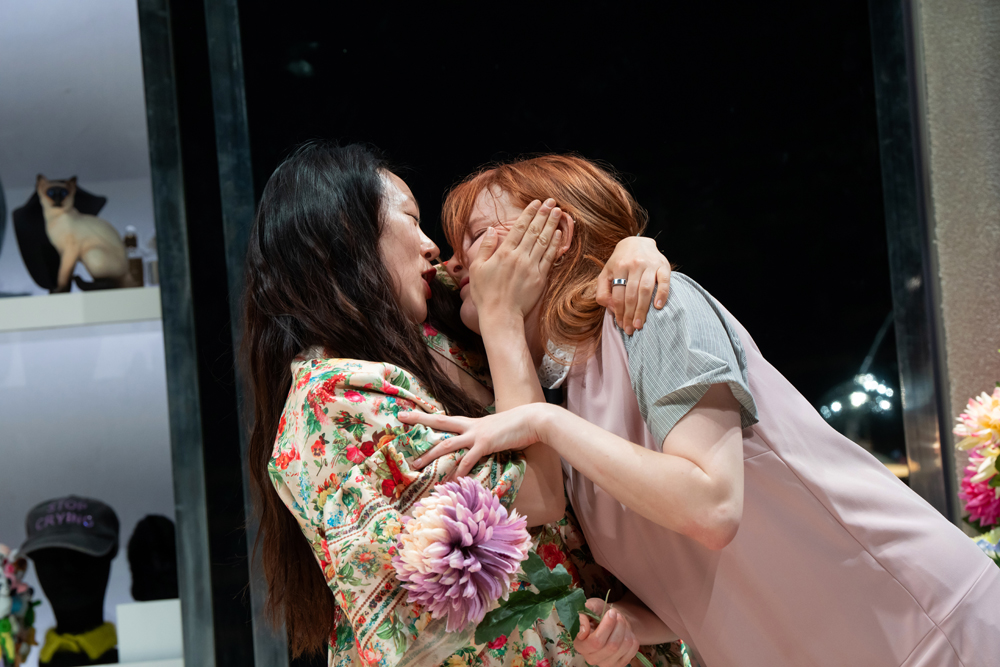
Yerin Ha as Madame and Phia Saban as Solange in The Maids. Courtesy St. Ann’s Warehouse. Photo: Julieta Cervantes.
What a comedown from last year’s The Picture of Dorian Gray. Also conceived and directed by Williams, that multimedia feat played on Broadway with Sarah Snook shadowed by a crew of camera operators, her image broadcast on multiple flying screens and composited with prerecorded footage. The earlier project had two big assets: Snook’s ravenous, virtuosic turn in an art gallery’s worth of British comic types, and the script, the majority of which was lifted straight off the page, retaining Oscar Wilde’s glittering, euphonious prose. While Wilson anchors her scenes with a delicate vulnerability that nicely complements Saban’s sulky ginger tomboy, they are overwhelmed by the pixelated hullabaloo. When Ha enters as Madame, she brings no menace or authority into the room, just chaotic mood swings and impulse costume changes.
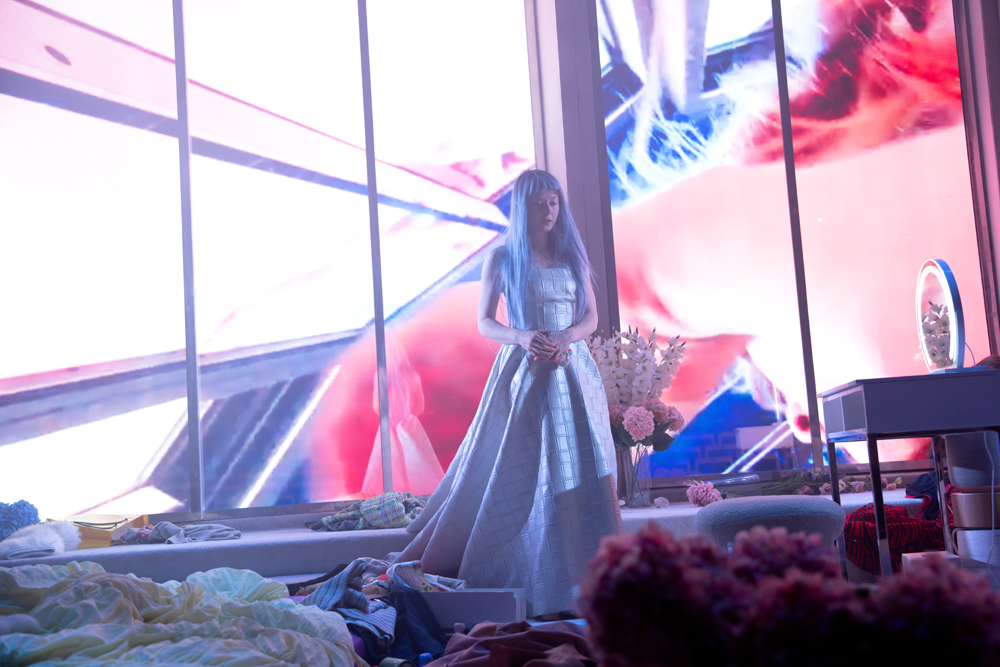
Lydia Wilson as Claire in The Maids. Courtesy St. Ann’s Warehouse. Photo: Julieta Cervantes.
In a climactic sequence—one of several, as the action winds down fitfully—defeated and suicidal Claire and Solange retreat into the vast closet, which has become a Narnian portal to some fantastic, purely digital dimension. On jumbo screens, we see the ecstatic sisters racing through what stage directions call “a psychedelic capitalist fantasia, a kaleidoscopic pink hall of mirrors.” It reads as online psychosis in full meltdown, physical reality dissolving into an AI slopscape as Claire abandons the unattainable material world. Finally, it felt like Williams was getting somewhere, a liminal zone of radical disembodiment where he should have begun, with a different text to molest. Visually, it reminded me of 2001: A Space Odyssey’s “Jupiter and Beyond the Infinite,” Dave Bowman’s POV as he hurtles down a trippy cosmic corridor. Yes, we all have a simpering, dutiful servant in our back pocket, and yes, like HAL 9000, it wants to destroy us. But does our death have to be so sexless, so brainless, so easy on the eyes?
David Cote is a theater critic, playwright, and librettist based in Manhattan. His work has been produced in New York, London, and around the US.